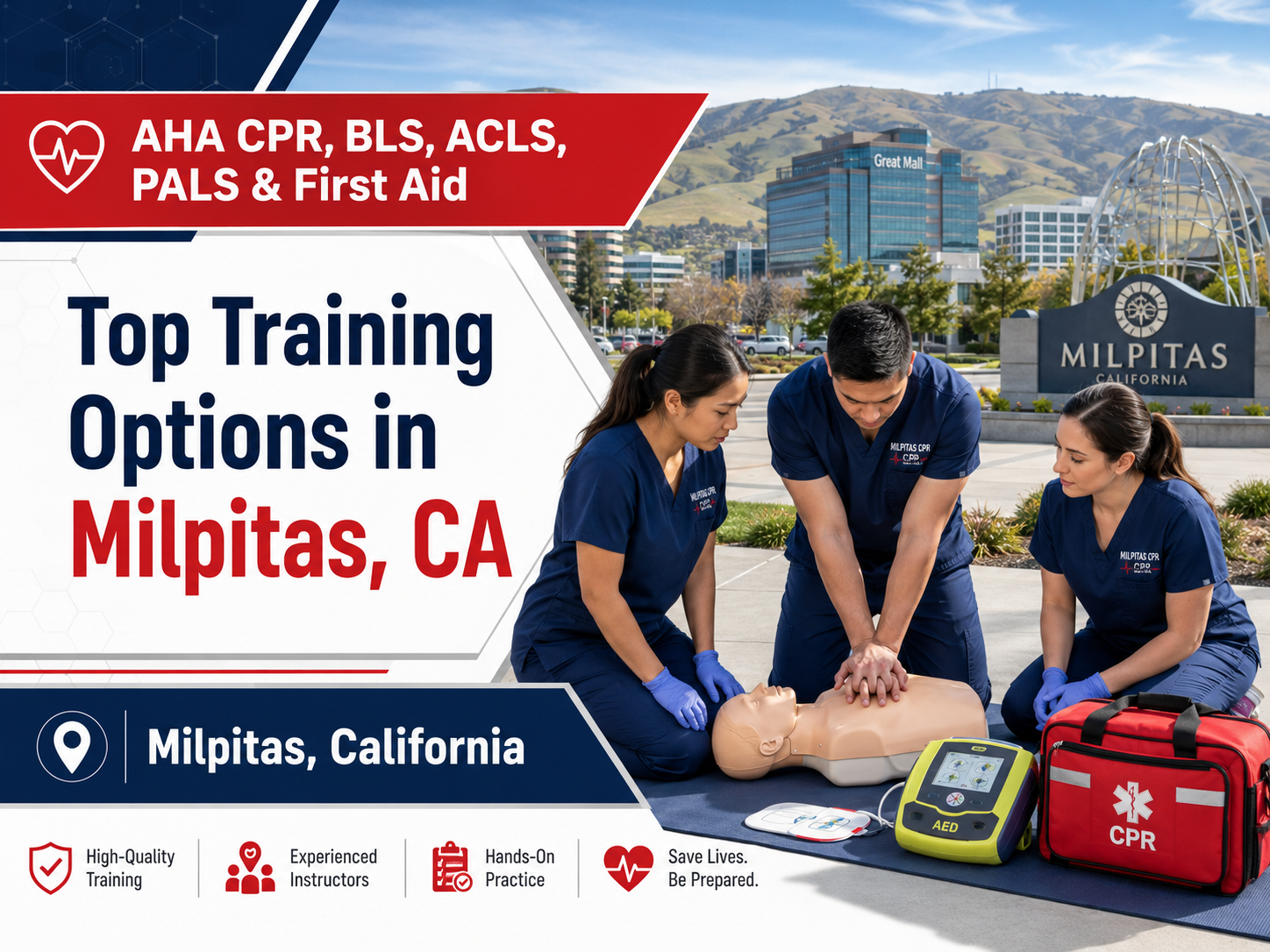
Milpitas has two very different workforces asking the same question this month: retail employees scheduling shifts around Great Mall, and technicians working inside the semiconductor and electronics plants along the city’s industrial corridor. Both groups keep running into the term “BLS CPR Certification Course” without a clear explanation of whether it applies to them or whether a shorter course would do. Milpitas, CA has a local training center that runs both options, and the short answer is that BLS is generally built for healthcare and clinical roles, while most retail and manufacturing employers are looking for standard workplace CPR and First Aid training instead.
This guide walks through what “getting BLS certified” actually involves, how retail and plant employers in Milpitas typically differ in what they require, and what to expect once you register for a class.
Key Takeaway
Most Great Mall retail staff and semiconductor-plant employees in Milpitas need a standard CPR, AED, and First Aid course rather than BLS, since BLS is designed around healthcare team protocols. If your employer’s safety policy specifically names “BLS,” follow that requirement exactly, since it likely comes from a corporate safety standard or an on-site medical response plan rather than a general preference.
What “Getting BLS Certified” Actually Involves
BLS, or Basic Life Support, is a certification level built around adult, child, and infant CPR, AED operation, and choking response, delivered with healthcare-specific elements like two-rescuer CPR and coordinated team response. Most BLS courses combine an online cognitive portion with an in-person or instructor-verified skills session, since employers and clinical programs generally expect hands-on demonstration rather than a certificate based on video completion alone.
The process typically looks like this: complete the classroom or online content, attend a skills session where an instructor checks compression depth, rate, and technique, then receive your certification once the skills check is complete. The exact format can vary by provider, so confirming what a specific class includes before registering is worth the extra step.
Do Great Mall Retail Employees Need BLS or Standard CPR?
Retail environments around Great Mall see thousands of daily visitors, and store managers occasionally assume “CPR certification” means the same course regardless of setting. In most cases, retail and food service employees are better matched to a standard CPR, AED, and First Aid course rather than BLS.
The distinction comes down to what the course covers. Standard CPR and First Aid training includes chest compressions, AED use, and choking response, along with basic injury care, without the two-person healthcare protocols built into BLS. Unless your role specifically involves clinical or emergency medical work, a general workplace course typically covers what a retail safety policy asks for.
If you supervise a team, checking whether your company’s safety policy uses the word “BLS” specifically or simply says “CPR certification required” will tell you which course to book.
Why Semiconductor and Manufacturing Employers Ask About BLS
Milpitas is home to a cluster of semiconductor and electronics manufacturers along its industrial corridor, and safety teams at these facilities often have more structured emergency response requirements than a typical retail environment. Some plants designate specific employees as on-site emergency responders, and those roles may call for BLS-level training because of the coordinated, team-based response it teaches.
For most other plant employees, a standard CPR and First Aid course, sometimes paired with workplace-specific safety training on chemical exposure or electrical hazards, is more typical. Because manufacturing safety requirements vary significantly by company and by role, checking with your EHS or safety manager about which certification level your specific position requires is the most reliable way to avoid taking the wrong course.
Skills Testing and What Completion Requires
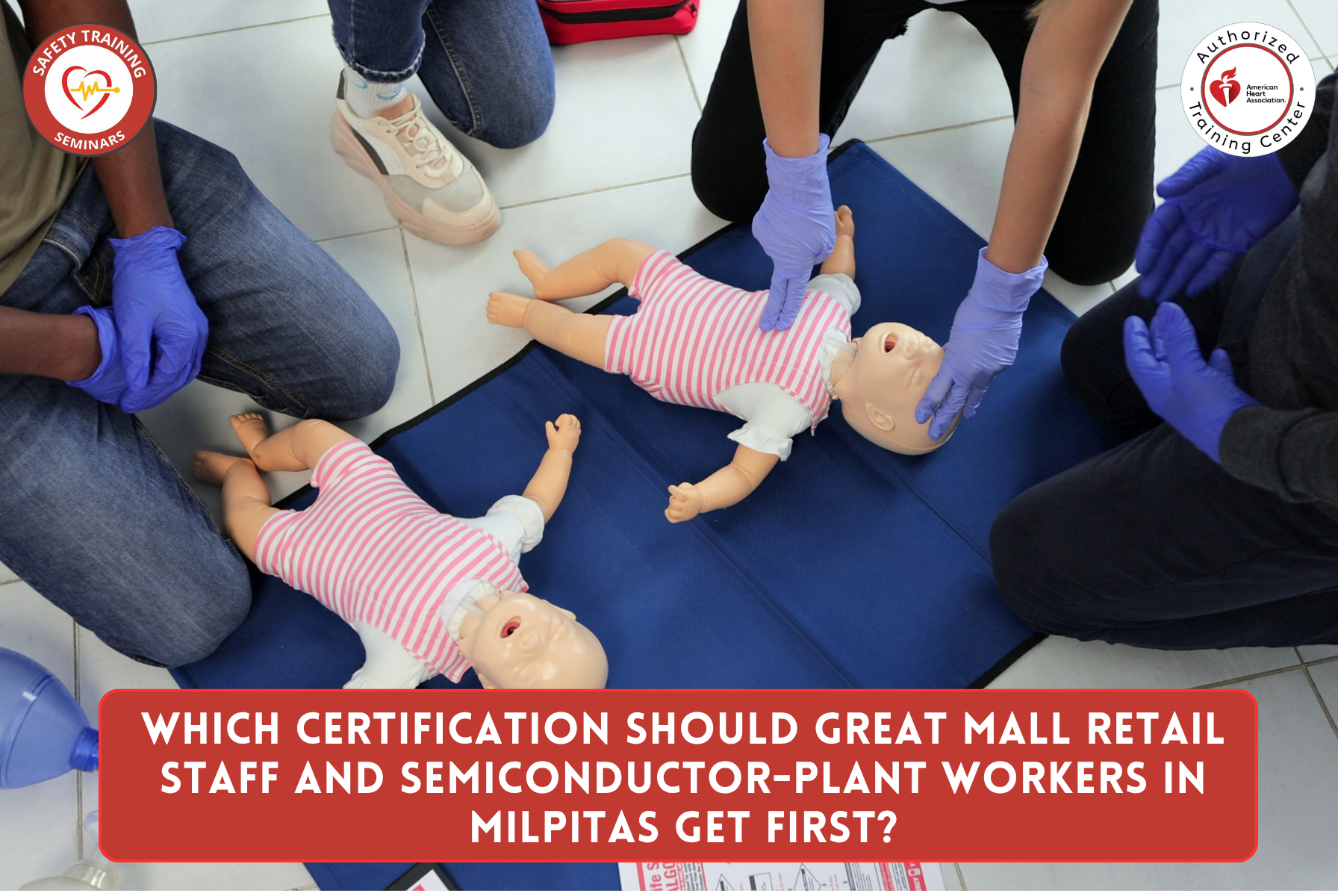
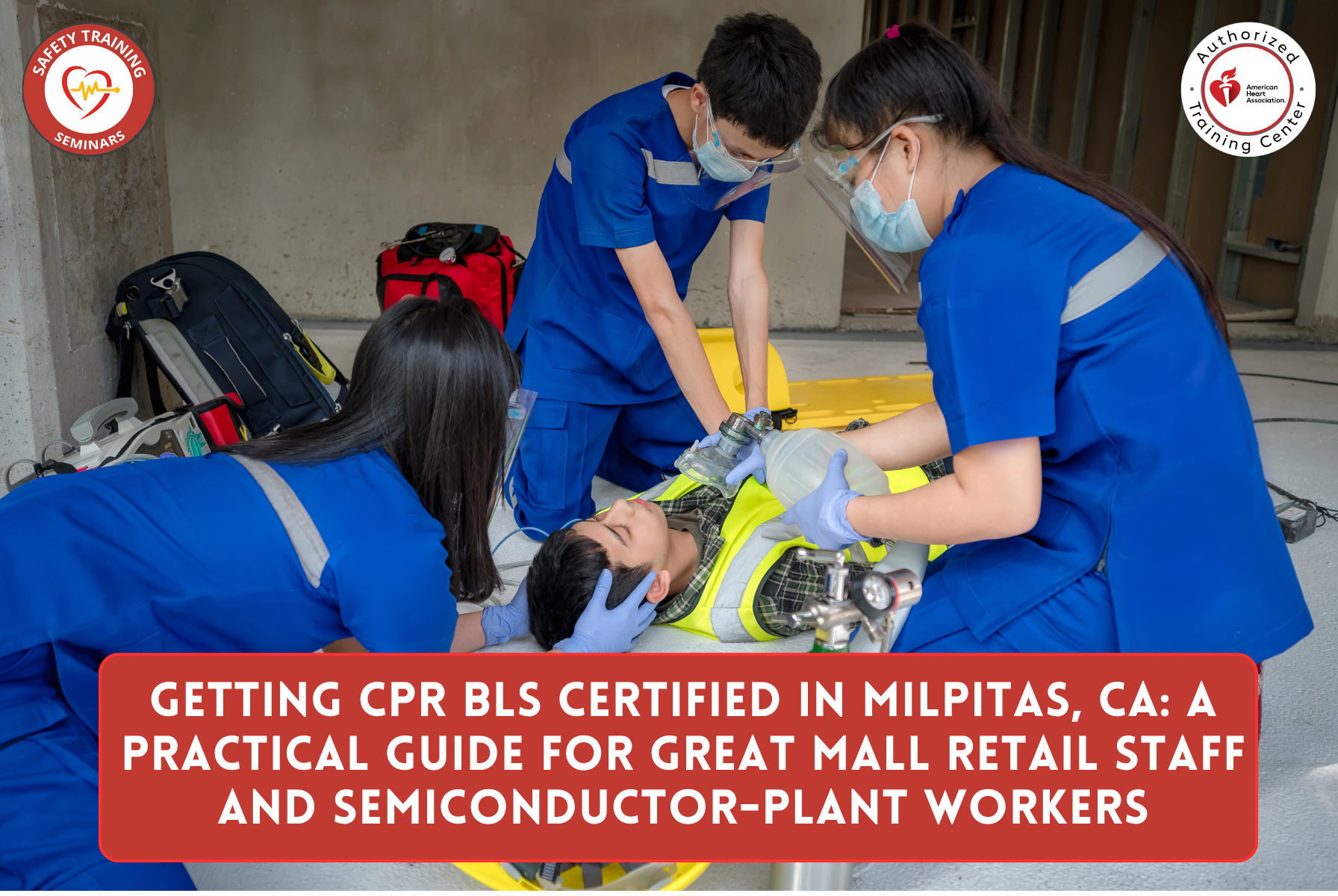
Regardless of which certification level applies to you, most in-person or blended classes include a hands-on skills check as part of completion. During this portion, an instructor watches students perform chest compressions on a training manikin, walks through rescue breathing, and confirms proper AED pad placement and rhythm response using a training device.
Choking response for adults, children, and infants is typically included as well. Students who are certifying for the first time sometimes assume they need to memorize exact ratios and timing before class, but instructors generally walk through this during the session itself rather than expecting prior study.
Choosing Between Individual Registration and Group Training
Employers with multiple staff needing certification, whether a retail management team or a plant safety crew, sometimes ask whether group scheduling is available rather than sending each employee through registration separately. This is worth asking about directly with a training provider before assuming individual sign-up is the only option, since coordinating a shift-friendly group session can reduce the amount of time a team spends away from the floor.
Milpitas’ Working Population and What It Means for Local Training Demand
Milpitas sits between San Jose, Fremont, and Santa Clara, and its workforce reflects that position: retail and hospitality staff supporting Great Mall, technicians and engineers in semiconductor and electronics manufacturing, warehouse and logistics workers, and a growing base of healthcare and clinical staff serving the surrounding communities. Because these groups have different certification needs, a single training center that offers both standard CPR courses and full BLS options serves the city better than one built around only one course type.
Employees commuting into Milpitas from nearby Santa Clara County cities also factor into local scheduling, since many prefer certifying near their workplace rather than adding a separate trip closer to home.
Safety Training Seminars in Milpitas
Safety Training Seminars operates a training center at 1772 Clear Lake Ave, Suite 200, Milpitas, CA 95035, offering CPR, BLS, ACLS, PALS, NRP, and First Aid courses. The location sits within the same industrial and commercial corridor as much of Milpitas’ retail and manufacturing employment, which makes it a practical stop for Great Mall staff and plant employees who want to complete training without a long drive out of the area. Reviewing which course level matches your role, standard CPR versus BLS, before registering helps make sure the certification you receive actually satisfies what your employer requires.
For readers researching options in surrounding communities, CPR, BLS, ACLS, and PALS course details for Campbell residents and local certification scheduling for Cupertino healthcare staff outline what’s available nearby. Employers in the South County area may find CPR and First Aid course options for Gilroy workplace teams useful for coordinating training closer to their facility, and families in the Los Altos area can review BLS and CPR class scheduling for Los Altos students.
Frequently Asked Questions
Do Great Mall retail employees need BLS certification specifically? Usually not. Most retail and food service roles are better matched to standard CPR, AED, and First Aid training. BLS is generally reserved for healthcare, clinical, and designated emergency-response roles.
What certification do semiconductor-plant safety teams in Milpitas typically need? This depends on the role and the facility’s safety plan. General plant employees often need standard CPR and First Aid, while designated on-site emergency responders may require BLS. Confirming with your EHS or safety manager is the most reliable way to know for certain.
Can employers in Milpitas schedule group certification for multiple employees? Group scheduling availability varies by provider and class size, so it’s worth asking a training center directly whether they can accommodate a team rather than individual sign-ups.
Is an online-only CPR certificate accepted by Milpitas employers? Many employers, particularly in healthcare and manufacturing safety roles, expect a hands-on or instructor-verified skills check rather than a certificate based on online completion alone. Confirm this requirement with your specific employer before registering.
How long does BLS or CPR certification typically remain valid? Validity periods are set by the certifying organization and can vary, so checking your card or confirming with your employer or the certifying body is the most accurate way to know your renewal timeline.
Final Thoughts
Whether you’re scheduling training for a Great Mall retail team or coordinating safety certification for a semiconductor plant crew, the decision usually comes down to matching the course level to what your specific role and employer require rather than defaulting to BLS by default. Standard CPR and First Aid cover most retail and general manufacturing needs, while BLS remains specific to healthcare and designated emergency-response positions. Safety Training Seminars’ Milpitas training center offers both course levels locally, and the location pages for nearby Santa Clara County communities linked above can help you compare scheduling before you register.