Milpitas has more jobs than employed residents, according to city figures, and you can see it in its daytime workforce. Technicians report to electronics plants along the I-880 corridor, sales associates open stores at the Great Mall, and teachers arrive at Milpitas Unified campuses. Sooner or later, many of them hear the same request from a supervisor or program coordinator: get CPR and First Aid certified.
American Red Cross courses are a common way to meet that request. Options generally include CPR, First Aid, CPR/AED, and combined First Aid/CPR/AED training, and some courses add child and infant skills to adult care. Workplace responders, childcare staff, healthcare students, and family caregivers all use these programs. One piece of advice comes first: find out the exact course your organization names before you register, because a similar-sounding class may not count.
The short answer: American Red Cross CPR and First Aid classes are available in Milpitas through local providers, including a Safety Training Seminars site on the city’s east side. Choose a course based on your purpose: a workplace safety role, a school or clinical requirement, childcare licensing, or family readiness. If you need a certificate, pick a format that includes a hands-on skills session.
CPR vs. First Aid: What Each Course Teaches
CPR training prepares you for one specific emergency. First Aid training prepares you for nearly everything else.
In a CPR course, you practice recognizing when someone is unresponsive and not breathing normally, calling 911, and giving chest compressions and rescue breaths. Red Cross First Aid content covers a broader range of injuries and sudden illnesses. It teaches you to assess the scene and provide care until emergency responders arrive.
AEDs connect the two subjects. These portable devices check the heart’s rhythm during sudden cardiac arrest, deliver a shock if one is needed, and give voice prompts that bystanders can follow. AED use happens during CPR, so many courses teach them together, which is where names like CPR/AED come from.
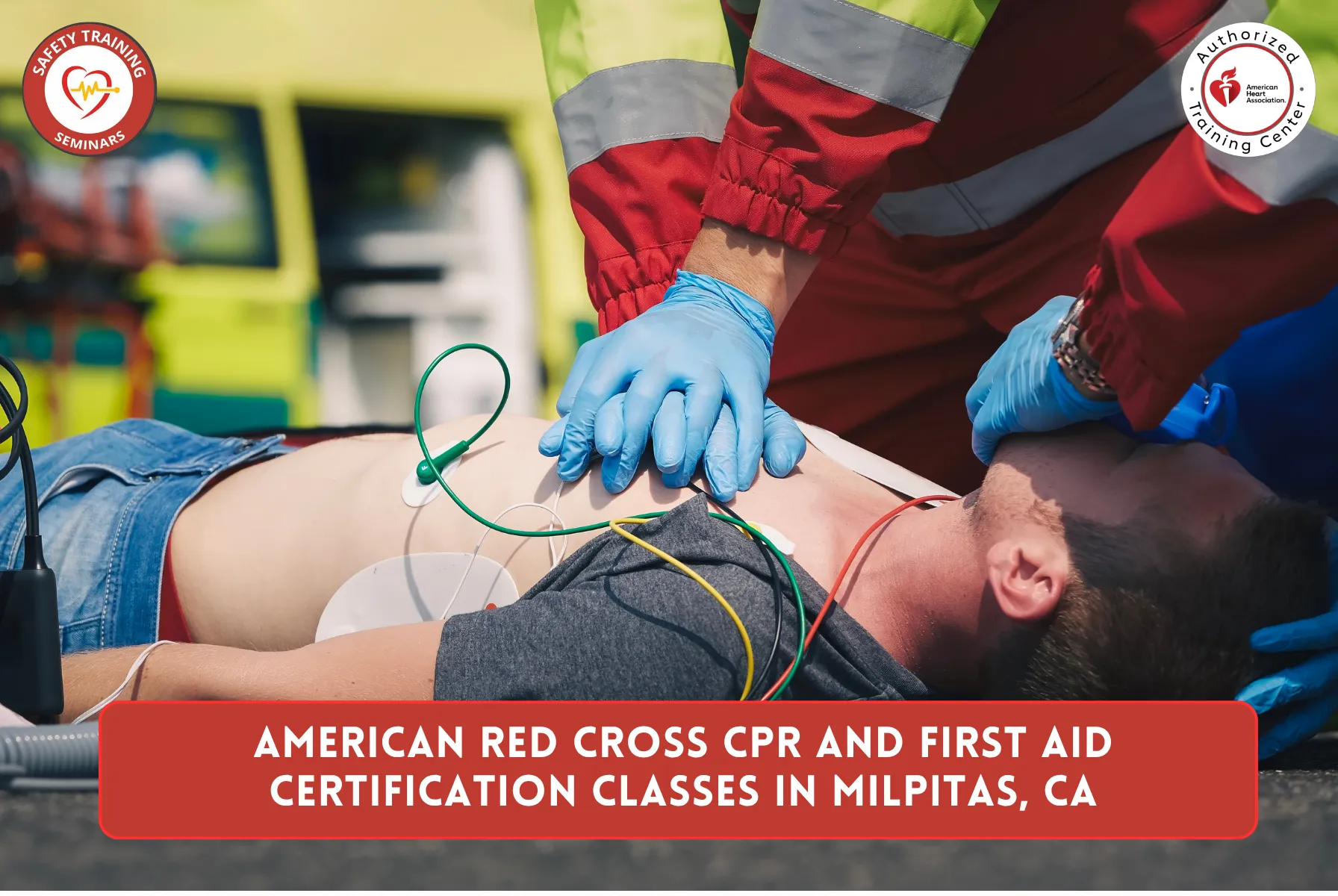
Blended Red Cross courses pair online lessons with an instructor-led skills session, where you practice compressions on manikins and place AED training pads. If you need a certificate, that skills session is often what separates a certification course from a general-knowledge one.
CPR Training for Milpitas Job Sites and Homes
Most CPR learners here fit one of two profiles.
The first is the workplace responder. Manufacturing plants, warehouses, offices, and large retailers often designate specific employees to respond to emergencies on site. An adult CPR/AED course may meet that request, though some employers want First Aid included.
The second is the household learner, such as a parent caring for a toddler and an aging grandparent under one roof. CPR technique changes with the patient’s age, so a course covering adult, child, and infant CPR is usually more practical for these learners.
Some Red Cross courses cover adults only, and others add pediatric skills. If you work around children, ask your employer whether an adult-only course is acceptable.
First Aid and AED Skills Beyond Cardiac Arrest
Consider a cut hand on an assembly line, a shopper who faints near a food court, or a coach watching a player struggle in summer heat. None of these starts as a CPR situation. They call for First Aid, and they happen far more often.
People who commonly choose the broader First Aid/CPR/AED training include:
- Safety team members at manufacturing and tech sites
- Retail and restaurant shift supervisors
- Preschool teachers and family childcare providers
- Youth coaches and fitness instructors
- Home caregivers and healthcare support staff
Who Signs Up in Milpitas?
Workplace safety teams
Milpitas has a large industrial base, with hundreds of manufacturing plants within city limits. Federal OSHA standards require trained first-aid responders at workplaces that don’t have medical facilities nearby, and Cal/OSHA sets its own rules. Your safety coordinator can confirm which course counts.
Nursing and allied health students
Clinical, EMT, and medical assistant programs often require CPR certification before placements begin. Some require a healthcare-provider-level course instead of general CPR/First Aid, so read your program handbook before you register.
Educators and childcare providers
Milpitas Unified is among the city’s largest employers, and local preschools and family childcare homes employ many more educators. California childcare licensing has its own pediatric First Aid and CPR rules, so check with Community Care Licensing before you choose a class.
Choosing a Course That Meets Your Requirement
| Training Type | Typical Use | Ask Before Enrolling |
| CPR | Responding to cardiac and breathing emergencies | Adults only, or children and infants too? |
| First Aid | Care for common injuries and sudden illness | Does my role also require CPR? |
| CPR/AED | CPR paired with AED operation | Is First Aid needed as well? |
| First Aid/CPR/AED | Broad training across all three areas | Must it include pediatric content? |
These pairings describe typical use. They are not legal or employment rules. The employer, school, clinical program, or licensing agency asking for your certificate makes the final call, so get its requirement in writing, including the course title and any skills-testing rules.
Why Location Matters in the “Crossroads of Silicon Valley”
Milpitas sits between I-880 and I-680, with Highway 237 running along its northern edge. BART and VTA light rail meet near the Great Mall. That access helps commuters, but rush-hour traffic can turn an evening class across the county into a long round trip.
For shift workers at manufacturing sites and retail staff with rotating schedules, training inside city limits is often easier to schedule. Residents of nearby Berryessa and southern Fremont may also find a Milpitas site closer than options in their own areas.
Safety Training Seminars in Milpitas
Safety Training Seminars operates a training site at 1772 Clear Lake Ave, Suite 200, Milpitas, CA 95035, near the corner of Landess Avenue.
The provider’s page for Red Cross CPR and First Aid options at the Milpitas location lists a blended CPR and First Aid course covering adult, child, and infant skills. It also lists online-only Red Cross CPR/AED and First Aid courses, and the page says those don’t issue a certification card. If your employer or licensing agency expects a certificate, that difference decides which course you need.
Before registering, check the course title, the age groups it covers, and its format against your requirement.
What Safety Training Seminars Offers Milpitas Learners
- East-side location. The site is on Landess Avenue, close to I-680.
- Parking and transit. The complex has a shared parking lot, and a VTA bus stop on Landess Avenue is a short walk away.
- Related Red Cross courses. Options include bloodborne pathogens training for workplaces that require it.
- Course details online. You can compare formats on the Milpitas CPR course information page before choosing a date.
Frequently Asked Questions
My Milpitas employer named me a first-aid responder. Which course do I take?
Start by asking your safety coordinator for the exact course title. Many responder roles call for First Aid/CPR/AED training, but some employers accept CPR/AED alone. Company policy or Cal/OSHA rules may also shape the requirement. Once you know the title, choose a class with a hands-on skills session so you receive a certificate.
Can nursing or medical assistant students use a Red Cross CPR and First Aid course?
It depends on the program. Some healthcare programs accept general CPR/First Aid certification, while others require a healthcare-provider-level CPR course before clinical placement. Ask your clinical coordinator before enrolling so you don’t pay for a course that won’t count.
Can I reach the Milpitas training site without a car?
Yes, by bus. The Clear Lake Avenue site is a short walk from a VTA stop on Landess Avenue. The site isn’t near the Milpitas BART station, so use VTA’s trip planner to map your route and leave extra time on class day.
What’s the difference between an online-only and a blended Red Cross course?
The difference is the skills session. You complete an online-only course entirely on a device. A blended course adds an instructor-led skills session after the online portion. For work or licensing requirements, blended is usually the safer choice, because some online-only versions don’t issue a certificate.
Do Milpitas preschool and family childcare providers need pediatric training?
Often, yes. California licensed childcare programs have specific pediatric First Aid and CPR requirements, and licensing staff decide which courses qualify. Confirm with Community Care Licensing, then pick a course that explicitly covers child and infant skills.
Pick the Course, Then the Date
CPR training prepares you for the moment someone stops breathing normally or their heart stops. First Aid covers the more frequent injuries and sudden illnesses that happen at work, school, and home. Many Milpitas workers and caregivers need both, and some also need child and infant skills.
The course title matters more than the calendar. Once your employer, school, or licensing agency confirms which Red Cross course it accepts, compare that requirement with the options Safety Training Seminars lists for its Milpitas site. When the course, format, and age coverage all match, booking a class is the easy part.