EMSA Preventive Health and Safety Training in Milpitas, California
Milpitas is in Santa Clara County, at the southern end of the San Francisco Bay Area, near San Jose, Santa Clara, and Fremont. Its residential neighborhoods, working families, and childcare settings create a local need for childcare professionals who understand everyday health precautions and safe care routines.
For people seeking EMSA training in Milpitas, Preventive Health and Safety education provides a way to build knowledge around children’s well-being in group care environments. Providers may encounter food allergies, hygiene concerns, illness prevention, sanitation procedures, and questions about age-appropriate nutrition while caring for young children. Understanding these subjects helps staff follow facility procedures and communicate health concerns to families.
Safety Training Seminars offers a local point of reference for people exploring childcare health and safety training in Milpitas. Learners should review the course description and registration information to determine the appropriate option for their individual requirements.
What Is EMSA Childcare Preventive Health and Safety Training?
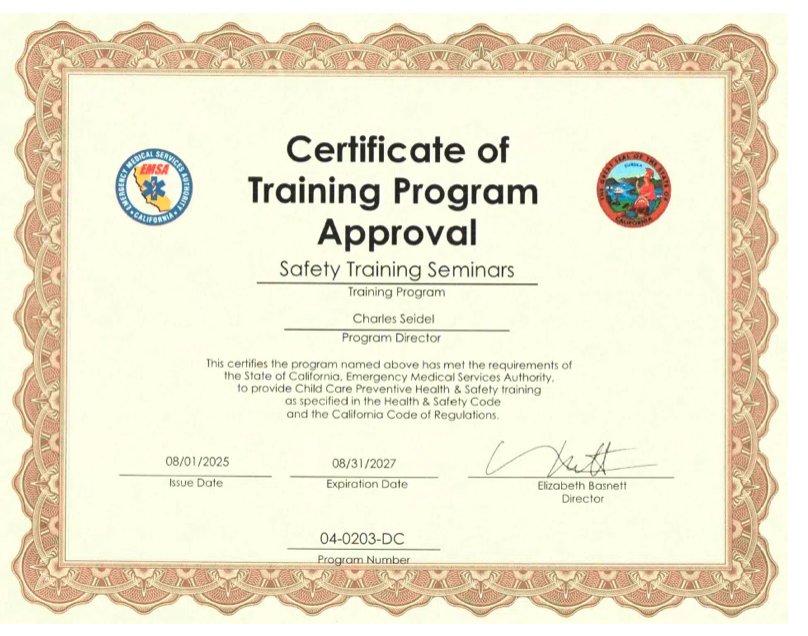
EMSA refers to the California Emergency Medical Services Authority. Its childcare-related training framework includes health and safety education intended to prepare childcare professionals to recognize and reduce common risks to children’s health.
Preventive Health and Safety training focuses on the routines that help maintain a healthy childcare setting. These can include proper handwashing, hygienic food handling, safe diaper-changing practices, environmental sanitation, children’s nutrition, and identifying conditions that may require additional attention.
The practical value of this education lies in applying preventive habits consistently. For example, a caregiver who follows appropriate cleaning procedures can reduce the spread of germs between children, while staff who understand food-allergy precautions can follow a child’s documented care plan and the center’s safety procedures.
The exact course requirements and completion documentation depend on the program and the learner’s circumstances. Confirm that the course offered matches the EMSA requirements applicable to your position before enrolling.
California Childcare Licensing: What Training May Be Required?
California’s childcare licensing rules distinguish between Preventive Health Practices, pediatric CPR, and pediatric first aid. The California Department of Social Services (CDSS), through Community Care Licensing, oversees applicable childcare licensing requirements.
Under California Health and Safety Code Section 1596.866, specified personnel have health and safety training obligations. These include at least one director or teacher at each Child Care Center and each Family Child Care Home licensee who provides care, subject to the applicable provisions. The required training framework includes pediatric first aid, pediatric CPR, and Preventive Health Practices. Childhood nutrition and lead exposure prevention are also addressed in the relevant statutory requirements.
The distinction matters when choosing an EMSA Childcare Health & Safety Certification course. Completing a Preventive Health Practices course does not automatically satisfy every separate CPR, first aid, or employment requirement. Pediatric CPR and first aid also have current-completion requirements, while the statutory Preventive Health Practices requirement is generally a one-time requirement for the specified personnel.
Because obligations can vary by role, facility type, licensing circumstances, and regulatory updates, prospective learners should confirm their situation with CDSS Community Care Licensing or their licensing analyst before registering.
Health and Sanitation Practices for Child Care Centers and Family Homes
Preventive health education helps childcare professionals establish routines that limit exposure to common hazards. In a Child Care Center, multiple staff members may share responsibility for food preparation, cleaning, diapering, and supervising groups of children. In a Family Child Care Home, the provider may handle several of these tasks personally.
Practical sanitation measures include washing hands at appropriate times, cleaning and sanitizing surfaces according to applicable procedures, handling food hygienically, and maintaining clean diapering and toilet areas. Separate procedures for food preparation and diaper changes help reduce cross-contamination.
Environmental health is another consideration. Childcare providers should understand the importance of fresh air, clean air filters, and reducing children’s exposure to secondhand smoke and other indoor hazards. Pest prevention and safe cleaning practices also contribute to a healthier setting.
These routines are particularly relevant in group environments, where one child’s illness or a shared contaminated surface can affect others. Training helps caregivers recognize risks, follow established procedures, and identify when a concern should be reported to a supervisor or communicated to a family.
Choose the Appropriate Childcare Training in Milpitas
EMSA Preventive Health and Safety education helps childcare professionals understand the practices that support children’s health, including sanitation, nutrition, infectious disease prevention, and lead exposure prevention. For childcare providers in Milpitas and surrounding Santa Clara County communities, selecting the correct course is an important step toward meeting applicable professional and licensing obligations.
Safety Training Seminars offers a local training option for people exploring childcare health and safety education. Review the course details, verify your individual requirements, and confirm registration availability before enrolling. Choosing training that matches your role can help you build practical knowledge while maintaining compliance with the requirements that apply to your childcare setting.
Lead exposure is an important concern in early childhood because young children are still developing and may be exposed through contaminated dust, soil, or deteriorating lead-based paint. Exposure can occur without obvious symptoms, making prevention and awareness important parts of childcare health practices.
California’s childcare Preventive Health Practices requirements include lead exposure prevention for the applicable newer licenses. Training should help providers understand potential sources of lead and the precautions needed to reduce children’s exposure.
In practice, childcare professionals can help by reporting deteriorating paint, preventing children from accessing potentially contaminated areas, following appropriate cleaning procedures, and raising environmental concerns with the facility operator or responsible authorities. Providers should not assume that a building is free of lead hazards simply because it appears well maintained.
For Milpitas childcare operators, lead prevention belongs within the broader responsibility of maintaining a safe indoor and outdoor environment. The California Childcare Health Program’s Preventive Health Training resources provide information about the curriculum used in EMSA-approved training programs.
Nutrition, Allergies, and Children’s Everyday Health
Nutrition is another important component of childcare health and safety education. Young children have different nutritional needs at different stages of development, so providers must pay attention to age-appropriate meals, suitable portions, and the dietary instructions shared by families.
Food allergies require careful handling. Childcare professionals should know how to follow a child’s documented allergy plan, prevent cross-contact when preparing or serving food, and communicate relevant concerns to the appropriate staff members. In 2026, California law also includes updated anaphylaxis-related instruction requirements for specified pediatric CPR and first aid training, so learners should verify that their separate courses meet current rules.
Children with diabetes or other medical dietary needs may require individualized arrangements. Providers should follow authorized care instructions rather than make independent medical decisions. Persistent feeding difficulties or concerns about growth should be communicated to parents or guardians in accordance with facility procedures.
Dental health also begins with everyday habits. Appropriate food choices and limiting frequent exposure to sugary snacks and drinks can support oral health. Nutrition education helps childcare providers understand how meals, snacks, allergies, and feeding routines fit into a child’s broader well-being.
Choose the Appropriate Childcare Training in Milpitas
EMSA Preventive Health and Safety education helps childcare professionals understand the practices that support children’s health, including sanitation, nutrition, infectious disease prevention, and lead exposure prevention. For childcare providers in Milpitas and surrounding Santa Clara County communities, selecting the correct course is an important step toward meeting applicable professional and licensing obligations.
Safety Training Seminars offers a local training option for people exploring childcare health and safety education. Review the course details, verify your individual requirements, and confirm registration availability before enrolling. Choosing training that matches your role can help you build practical knowledge while maintaining compliance with the requirements that apply to your childcare setting.
EMSA Preventive Health and Safety training may be relevant to several groups involved in early childhood care:
- Family Child Care Home providers: Individuals operating licensed home-based childcare can learn about sanitation, nutrition, lead exposure prevention, and everyday health practices.
- Child Care Center directors and teachers: Staff responsible for children’s care can strengthen their understanding of preventive procedures and applicable licensing obligations.
- New childcare operators: People preparing to open a childcare facility can identify training requirements that may apply before or during the licensing process.
- Childcare assistants and support staff: Depending on their roles and employer requirements, assistants may benefit from learning about hygiene, food handling, environmental safety, and children’s health.
Milpitas has local early childhood education programs, including the Milpitas Unified School District’s Rose and Sunnyhills Child Development Centers. These programs illustrate the local early learning environment, although their existence does not imply any partnership with or endorsement of Safety Training Seminars.
Anyone entering childcare should confirm which courses are required for their particular position rather than assuming the same training applies to every employee.
Finding Childcare Health and Safety Training Near Milpitas
Milpitas is situated near several communities within the southern Bay Area. Childcare professionals living or working in San Jose, Santa Clara, Fremont, and Sunnyvale may also consider Milpitas when exploring regional training options.
Local relevance matters for providers who need to coordinate professional training with their childcare responsibilities. However, learners should confirm the location, course format, and available registration options before making travel arrangements.
Safety Training Seminars provides a Milpitas training location for people researching EMSA-related childcare education. Those seeking a particular Preventive Health Practices course should check the provider’s course information to ensure it meets their applicable requirements. People who also need pediatric CPR or first aid should verify whether those courses must be completed separately.
Safety Training Seminars in Milpitas, CA
Safety Training Seminars is a local option for individuals researching childcare health and safety education in Santa Clara County.
The Milpitas training center is located at 1772 Clear Lake Ave, Suite 200, Milpitas, CA 95035.
Before registering, review the available course description, eligibility information, completion documentation, and registration instructions. If your employer or licensing analyst has specified a particular EMSA-approved curriculum, verify that the selected course satisfies that requirement.
You can also explore the provider’s official website to locate course information and determine the appropriate next step. Confirm current schedules and availability directly before planning your attendance.
Choose the Appropriate Childcare Training in Milpitas
EMSA Preventive Health and Safety education helps childcare professionals understand the practices that support children’s health, including sanitation, nutrition, infectious disease prevention, and lead exposure prevention. For childcare providers in Milpitas and surrounding Santa Clara County communities, selecting the correct course is an important step toward meeting applicable professional and licensing obligations.
Safety Training Seminars offers a local training option for people exploring childcare health and safety education. Review the course details, verify your individual requirements, and confirm registration availability before enrolling. Choosing training that matches your role can help you build practical knowledge while maintaining compliance with the requirements that apply to your childcare setting.