Finding the right CPR and First Aid certification class in Milpitas, CA, starts with understanding which skills and course completion documentation you need. Safety Training Seminars offers American Heart Association (AHA) training options at 1772 Clear Lake Ave, Suite 200, Milpitas, CA 95035, serving residents and professionals from Milpitas, San Jose, Fremont, Santa Clara, and Sunnyvale.
Whether you are a parent, childcare provider, teacher, workplace employee, or healthcare professional, choosing the right program depends on your responsibilities and any requirements established by your employer or school. Options include general CPR and First Aid training as well as healthcare-focused Basic Life Support (BLS). Understanding the differences can help you register for the appropriate course.
Where Can You Find CPR and First Aid Classes in Milpitas, CA?
Milpitas residents can find CPR and First Aid training at the Safety Training Seminars location on Clear Lake Avenue.
Training center address: 1772 Clear Lake Ave, Suite 200,Milpitas, CA 95035
The location serves people living and working throughout the southern East Bay and Silicon Valley communities. Residents traveling from North Milpitas, San Jose, Fremont, Santa Clara, and Sunnyvale can consider this training center when comparing local course options.
Safety Training Seminars lists several American Heart Association training programs at its Milpitas location, including Heartsaver First Aid CPR AED, Pediatric First Aid CPR AED, and healthcare-provider courses such as BLS. The appropriate option depends on whether you need general emergency-response skills or training specifically intended for healthcare providers.
Before registering, review the individual course description to confirm the skills covered, learning format, and completion requirements.
What Does CPR and First Aid Training Cover?
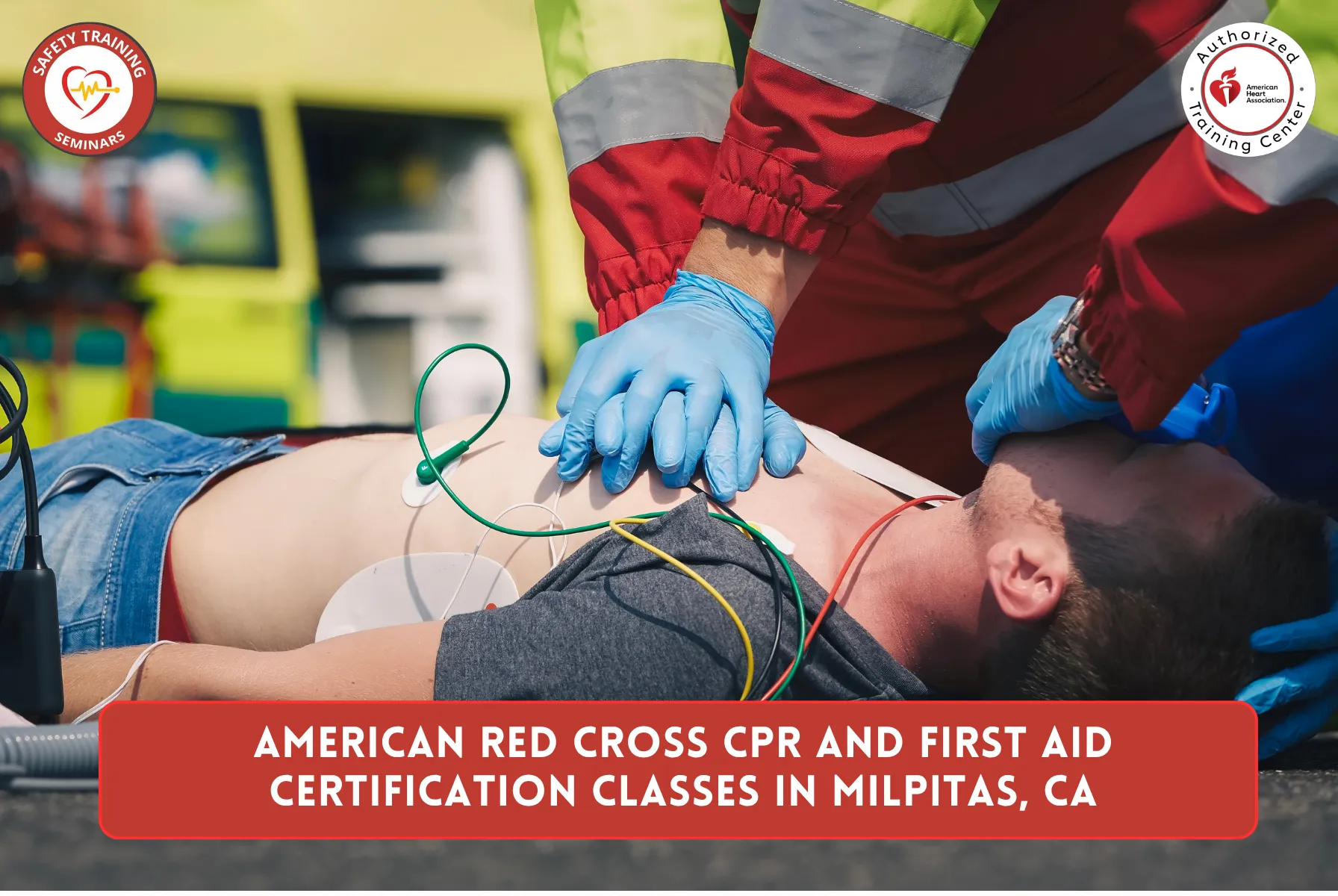
CPR (cardiopulmonary resuscitation) is an emergency response technique used when someone experiences cardiac arrest. First Aid involves providing immediate assistance to someone who is injured or suddenly becomes ill before professional medical care is available.
A combined CPR and First Aid course can cover several important emergency-response skills, depending on the selected program.
CPR and AED Skills
Participants may learn how to:
- Recognize cardiac arrest and identify when someone needs CPR.
- Perform chest compressions and appropriate rescue breaths.
- Respond to emergencies involving adults, children, and infants when those age groups are included.
- Operate an automated external defibrillator (AED), a portable device that analyzes heart rhythm and can deliver an electrical shock when appropriate.
- Recognize choking emergencies and provide age-appropriate assistance.
First Aid Knowledge
First Aid instruction may address:
- Recognizing medical emergencies and knowing when to request emergency assistance.
- Responding to bleeding, wounds, and common injuries.
- Identifying signs of heart attack, stroke, and breathing difficulties.
- Responding to burns, allergic reactions, and environmental emergencies.
- Understanding basic emergency assessment and personal safety precautions.
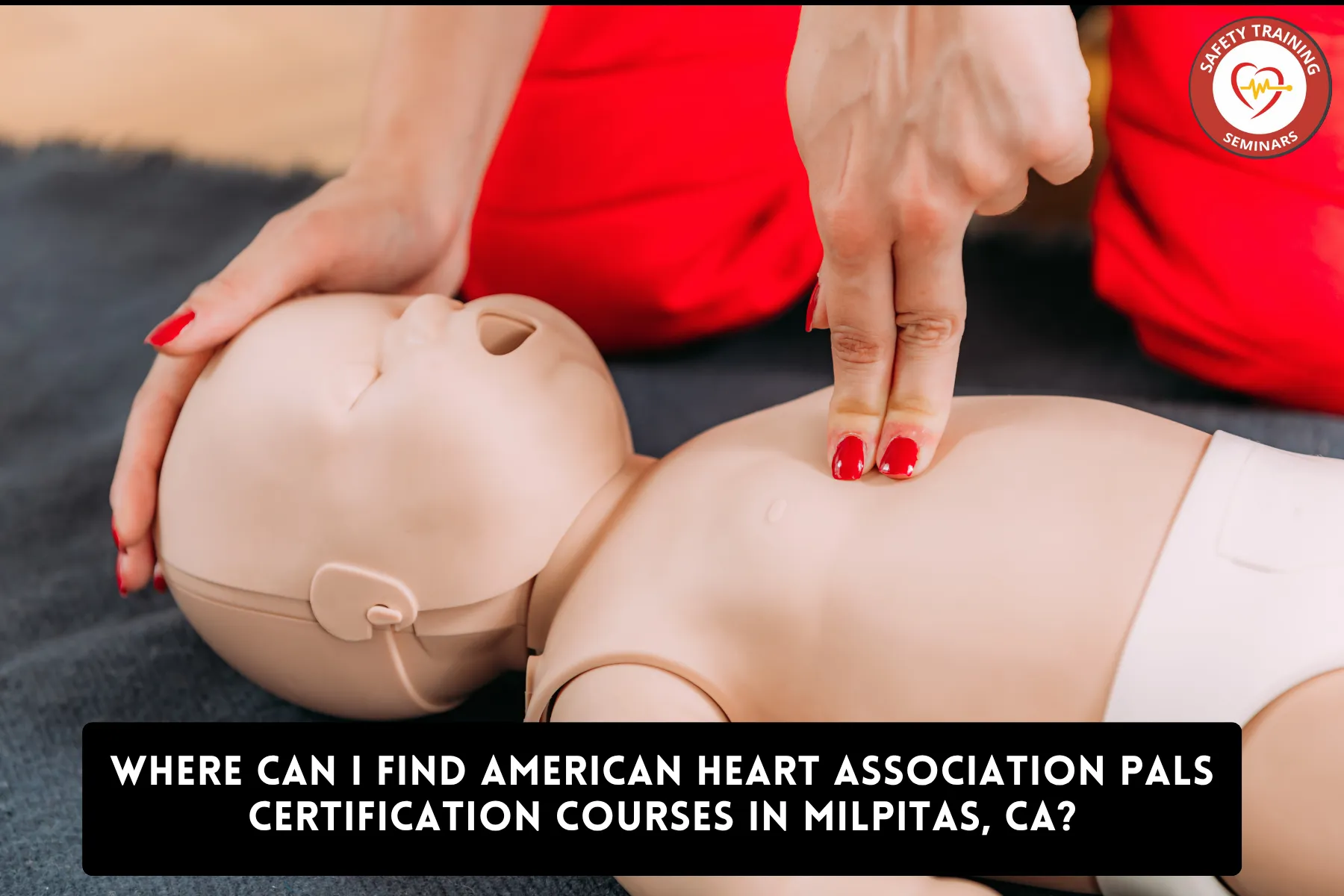
The exact curriculum depends on the course selected. For example, the AHA Heartsaver First Aid CPR AED program combines First Aid, CPR, and AED education, while Pediatric First Aid CPR AED focuses on emergencies involving children and infants.
Review the course description before enrolling to confirm that the required topics are included.
CPR vs. CPR and First Aid vs. BLS: Which Course Do You Need?
Not every learner needs the same type of emergency-response training. Understanding the differences between general CPR, combined CPR and First Aid, and Basic Life Support (BLS) can help you avoid registering for an unsuitable program.
| Course type | Main focus | Intended audience |
| CPR and AED | CPR techniques, cardiac emergency response, and AED use | Community members and workplace employees |
| CPR and First Aid | CPR, AED use, and common medical or injury emergencies | Teachers, caregivers, employees, and the general public |
| Healthcare Provider BLS | High-quality CPR, ventilation, AED use, and team-based resuscitation | Nurses, physicians, EMS personnel, and other healthcare professionals |
General CPR training: A CPR-focused course is appropriate for people who primarily need to understand cardiac emergency response and AED use.
CPR and First Aid training: This option provides broader emergency-response education. It can be appropriate for employees, childcare professionals, teachers, parents, and others whose responsibilities involve both medical emergencies and injuries.
Basic Life Support (BLS): AHA BLS is specifically designed for healthcare professionals. It emphasizes high-quality CPR, ventilation, AED use, and responding effectively to life-threatening emergencies.
Importantly, BLS does not automatically include First Aid. The American Heart Association treats these as separate training areas.
Healthcare employees and students preparing for clinical placements should check their organization’s requirements before choosing a general CPR and First Aid course.
Who Should Consider CPR and First Aid Training in Milpitas?
Milpitas has a diverse residential and professional community, creating different reasons for people to develop emergency-response skills.
Some of the groups who may benefit include:
- Parents and family caregivers: Learn how to recognize emergencies and respond appropriately when caring for children, older relatives, or other family members.
- Teachers and childcare professionals: Pediatric First Aid CPR AED training can help prepare people responsible for children’s safety.
- Healthcare workers and students: Determine whether general CPR training or healthcare-provider BLS is required for employment, education, or clinical placements.
- Workplace employees and supervisors: CPR and First Aid knowledge can support workplace emergency preparedness in offices, retail environments, manufacturing facilities, and other settings.
- Coaches and fitness professionals: Learn emergency-response skills relevant to recreational activities and physical exercise environments.
- Community volunteers: Develop practical knowledge that may be useful when assisting someone at a community gathering or public event.
The right course depends on the learner’s responsibilities, the age groups they work with, and the requirements established by their employer or organization.
Why Local CPR and First Aid Training Matters in Milpitas
Milpitas sits between major Silicon Valley employment centers and communities across the southern East Bay. Its residential neighborhoods, schools, shopping areas, workplaces, and recreational spaces create everyday environments where emergency preparedness can be valuable.
For example, parents may want pediatric emergency-response knowledge for their households, while employees in offices and commercial environments may need training that supports workplace safety policies.
Childcare facilities and educational environments also have distinct training considerations. Someone responsible for infants and young children may need Pediatric First Aid CPR AED rather than a general adult-focused CPR course.
The surrounding communities add to the demand for accessible training options. People traveling from San Jose, Fremont, Santa Clara, and Sunnyvale may also consider Milpitas when comparing nearby CPR and First Aid classes.
Local healthcare environments provide another reason to distinguish general training from professional requirements. Healthcare workers should check the specific expectations of their employers and clinical organizations rather than assuming that every CPR course provides the same preparation.
How to Choose the Right CPR and First Aid Class
Before registering for a CPR and First Aid certification course, consider the following factors.
1. Identify the required training.
Determine whether you need CPR and AED training, combined CPR and First Aid, Pediatric First Aid CPR AED, or healthcare-provider BLS.
2. Check the age groups covered.
If you work with children, verify whether the course includes child and infant CPR, choking response, and pediatric First Aid.
3. Confirm employer or school requirements.
Ask your employer, school, licensing organization, or clinical placement coordinator which course and completion documentation they accept.
4. Review the learning format.
AHA courses may offer classroom, blended, or self-guided learning options, depending on the specific program and participating training center. Some pathways require an additional in-person skills session.
5. Understand the completion requirements.
Check whether the program includes hands-on practice, skills assessment, and an applicable AHA Course Completion eCard.
6. Verify location and registration details.
Confirm the actual training address, available dates, fees, prerequisites, and registration instructions before making payment.
These steps help learners select training based on actual requirements instead of relying only on course titles or general promotional descriptions.
CPR and First Aid Training Options from Safety Training Seminars
Safety Training Seminars provides American Heart Association training options at its Milpitas training center.
Safety Training Seminars – Milpitas : 1772 Clear Lake Ave, Suite 200, Milpitas, CA 95035
The listed training options include:
- Heartsaver First Aid CPR AED: Combines CPR, AED, and First Aid education for people with little or no medical training.
- Heartsaver Pediatric First Aid CPR AED: Focuses on emergency response involving children and infants, making it relevant to childcare providers, teachers, and caregivers.
- BLS for Healthcare Providers: Designed for healthcare professionals who need training in high-quality CPR, ventilation, AED use, and resuscitation response.
- ACLS and PALS: Additional healthcare-focused programs for professionals whose responsibilities require advanced cardiovascular or pediatric life support training.
The appropriate course depends on your professional responsibilities and the documentation you need.
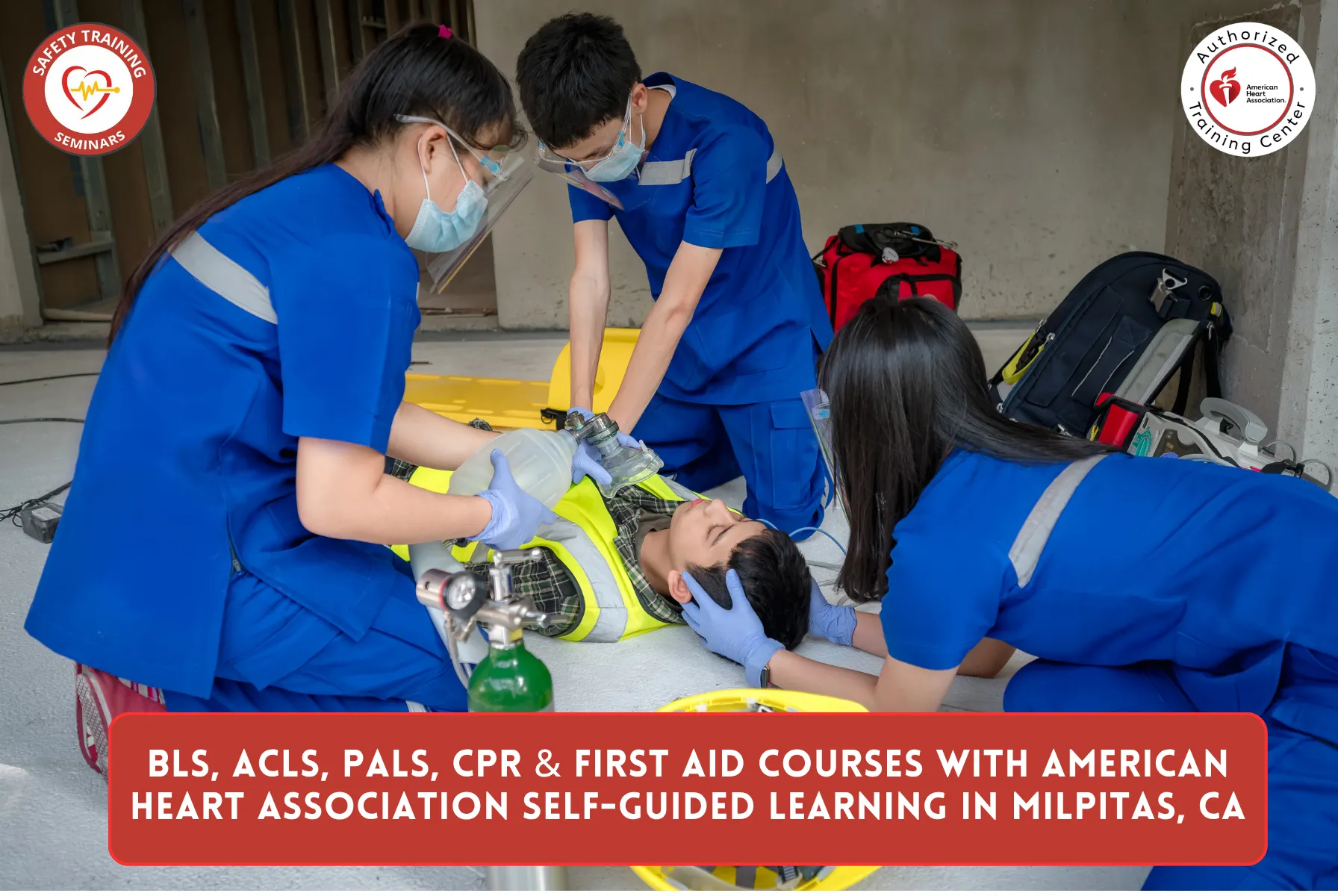
The American Heart Association offers different learning pathways for applicable Heartsaver programs, including blended learning and Self-Guided Learning™. These formats involve specific completion requirements, and availability varies by training center and course.
Where applicable, learners who successfully complete all required course components receive an AHA Course Completion eCard. This is documentation of successful course completion, not a professional license. Employers can independently verify applicable AHA eCards.
For current Milpitas course offerings, review the official Safety Training Seminars Milpitas training and registration information.
How to Register for a CPR and First Aid Class in Milpitas
Registering for the appropriate training involves a few straightforward steps:
- Identify your training needs: Determine whether you need general CPR, CPR and First Aid, pediatric training, or healthcare-provider BLS.
- Review the course description: Check the curriculum, intended audience, and required skills.
- Confirm the details: Verify the Milpitas training address, available dates, course format, fees, and prerequisites.
- Complete registration: Follow the instructions on the official registration page and provide the requested information.
- Complete all course requirements: Follow the applicable learning and skills-assessment process to qualify for the relevant course completion documentation.
If your employer or school requires a particular AHA course, confirm that requirement before purchasing a training option.
Frequently Asked Questions About CPR and First Aid Classes in Milpitas, CA
1. Where can I find a CPR and First Aid certification class in Milpitas, CA?
Safety Training Seminars offers CPR and First Aid training options at 1772 Clear Lake Ave, Suite 200, Milpitas, CA 95035. The location serves learners from Milpitas and surrounding communities, including San Jose, Fremont, Santa Clara, and Sunnyvale. Review the individual course listing to confirm the appropriate program and registration details.
2. What is the difference between CPR training and CPR and First Aid training?
CPR training focuses on responding to cardiac emergencies through chest compressions, rescue breaths when appropriate, and AED use. CPR and First Aid training adds education about injuries, sudden illnesses, and other emergency situations. The combined course is useful for people whose workplace or personal responsibilities involve broader emergency preparedness.
3. Who should take a CPR and First Aid course?
Parents, babysitters, teachers, childcare providers, workplace employees, fitness professionals, and community members may benefit from CPR and First Aid education. The appropriate program depends on the learner’s responsibilities and any training requirements established by their employer, school, or organization.
4. Do healthcare professionals need BLS instead of general CPR and First Aid?
Healthcare professionals often need AHA BLS rather than a general-public CPR and First Aid course. BLS covers healthcare-provider skills, including high-quality CPR, ventilation, AED use, and team-based resuscitation. Healthcare workers should confirm their employer’s requirements before registering.
5. How do I know whether a CPR course meets my employer’s requirements?
Ask your employer which training organization, course title, learning format, and completion documentation are required. Check whether the program includes the necessary age groups and hands-on skills assessment. Do not assume that every CPR or First Aid course meets every workplace requirement.
6. What documentation do I receive after completing an AHA course?
Successful participants who meet all applicable course requirements receive the relevant AHA Course Completion Card or eCard when applicable. The documentation identifies the course completed and can be verified through the American Heart Association’s eCard system. Requirements and issuance procedures depend on the specific course and training center.
Find the Right CPR and First Aid Training Near Milpitas
Learning CPR and First Aid can help residents, caregivers, educators, and workplace professionals become better prepared to respond to emergencies. Choosing the right program means understanding the difference between general CPR, combined First Aid and CPR, pediatric training, and healthcare-provider BLS.
Safety Training Seminars provides AHA training options at its Milpitas location at 1772 Clear Lake Ave, Suite 200, Milpitas, CA 95035. Whether you are obtaining training for employment, educational requirements, childcare responsibilities, or personal preparedness, review the course details before enrolling.
Explore available CPR and First Aid certification classes in Milpitas to find the appropriate training option, verify the registration details, and take the next step toward developing practical emergency-response skills.