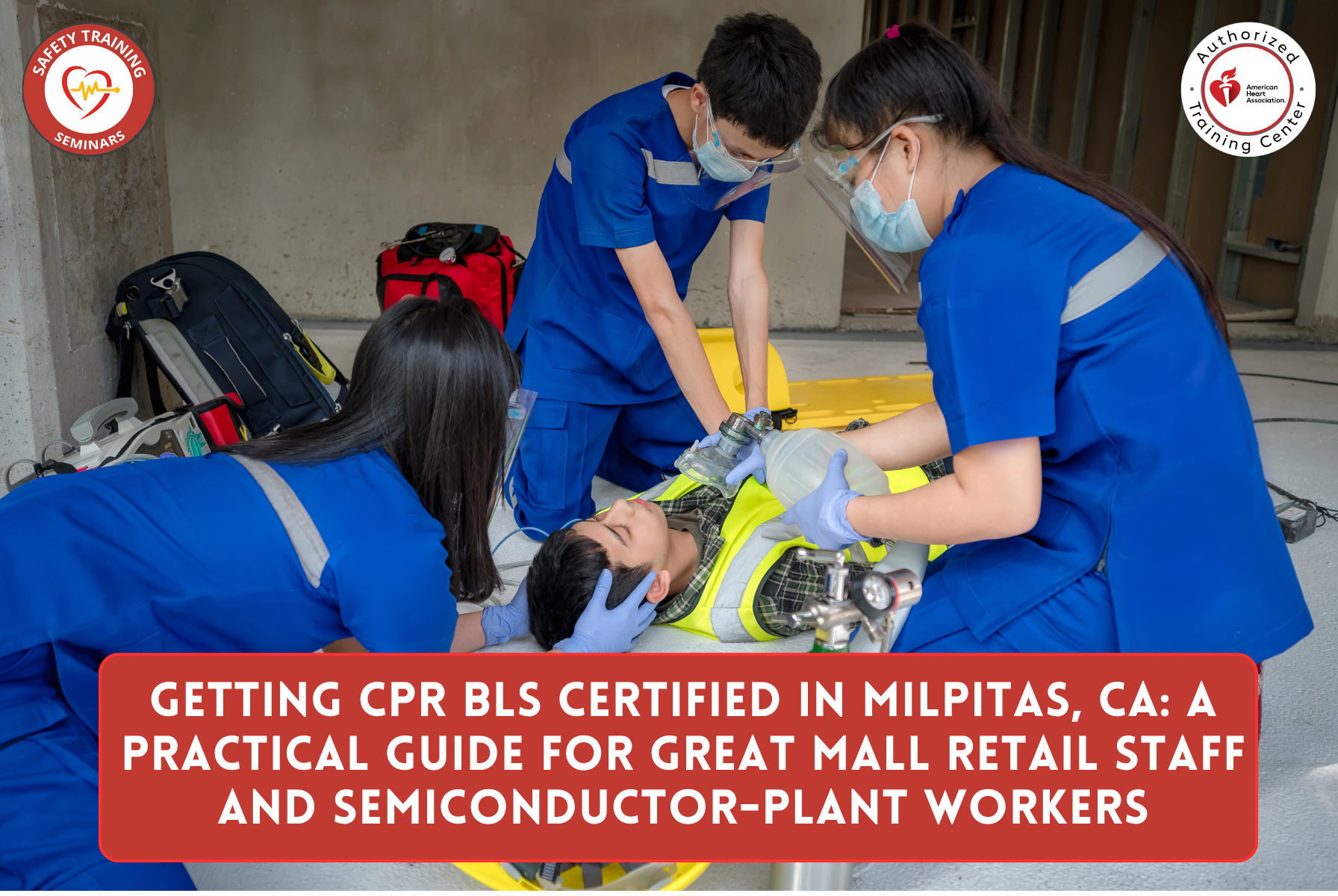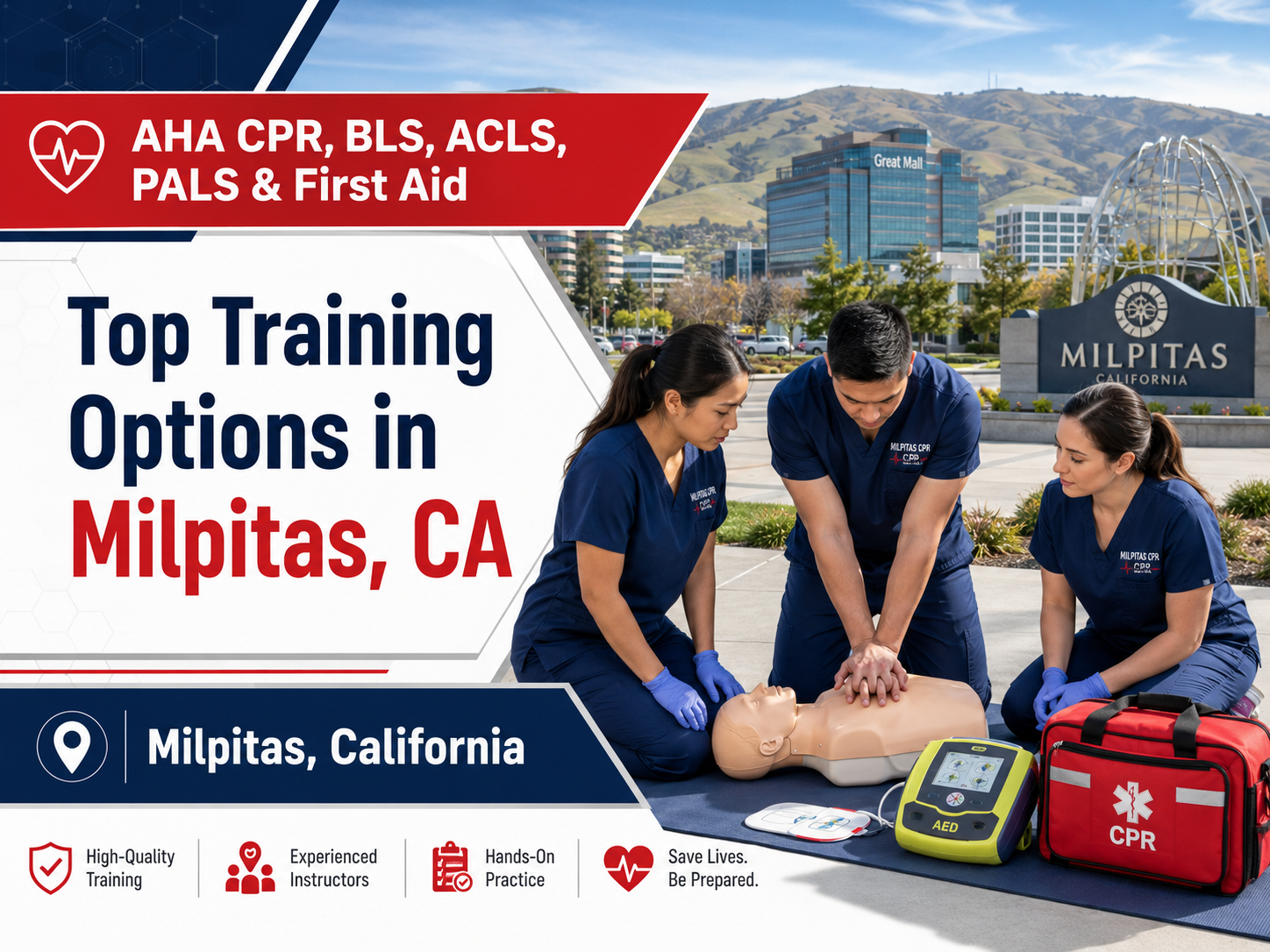
A retail employee at Great Mall and a technician inside a semiconductor facility may both benefit from emergency training, but they do not automatically need the same certification. In Milpitas, CA, most nonclinical employees should usually start by checking whether their workplace calls for CPR/AED and First Aid. A BLS CPR Certification Course is generally more appropriate when an employer specifically requires healthcare-level BLS or the worker serves in a medical or trained first-response role.
Great Mall is a major Milpitas shopping destination, while the city identifies advanced manufacturing and technology as important parts of the local economy.
Key Takeaway: Great Mall retail staff and most semiconductor-plant employees should first check their employer’s written safety requirement. For many nonclinical jobs, CPR, AED, and First Aid training is the practical starting point; BLS becomes the better first choice when the position or workplace response role specifically requires it.
Start With the Job Role, Not the Course Name
AHA Heartsaver First Aid CPR AED courses are designed for people with little or no medical training who need first aid, CPR, and AED skills for work or other requirements. The AHA BLS Provider Course, by contrast, is designed for healthcare professionals, trained first responders, and people in healthcare training programs. The AHA advises learners to confirm the correct course with their employer.
A useful rule for Milpitas workers is:
- Retail, office, or general industrial employee: check whether the employer requires CPR/AED, First Aid, or a combined workplace course.
- On-site nurse, EMT, medical responder, or healthcare-level response role: verify whether BLS is required.
- Employee entering a healthcare program or clinical job: BLS may be the appropriate first credential.
- Anyone given a company-specific requirement: follow the exact course name in that requirement.
What Makes Sense for Great Mall Retail Staff?
For a typical retail worker, CPR/AED and First Aid training is usually more directly aligned with nonmedical workplace response. Great Mall is an enclosed outlet shopping, dining, and entertainment destination in Milpitas, so employees work in a busy public environment.
A workplace-focused course can teach CPR, AED use, and basic first aid within the limits of the learner’s training. The AHA positions Heartsaver courses for workforce and community learners with little or no medical training.
Different Great Mall roles may follow different employer policies, so staff should ask the employer or safety manager for the exact required course before registering.
Employees who live or work elsewhere in the South Bay can also compare CPR and life-support course options in San Jose when choosing a training location.
What Should Semiconductor-Plant Workers Take First?
Semiconductor and advanced-manufacturing workplaces need a role-specific answer. Milpitas highlights advanced manufacturing and technology as local industries, but working in a technical plant does not by itself mean an employee needs BLS.
For many production, engineering, maintenance, warehouse, laboratory-support, or administrative employees, workplace CPR/AED and First Aid may still be the first course if that is what the employer’s emergency plan requires. OSHA says workplace medical and first-aid arrangements depend on the hazards and circumstances of the particular workplace.
Some facilities designate employees as first-aid responders or members of an emergency-response team. Those workers should follow the company’s written requirements. If the role calls for healthcare-level resuscitation, BLS may be appropriate; if it calls for general workplace first response, CPR/AED and First Aid may be the correct starting point.
Workers commuting through nearby Santa Clara can review Santa Clara CPR, BLS, ACLS and PALS training options when comparing nearby course locations.
BLS vs. CPR and First Aid: The Practical Difference
The clearest difference is the intended learner.
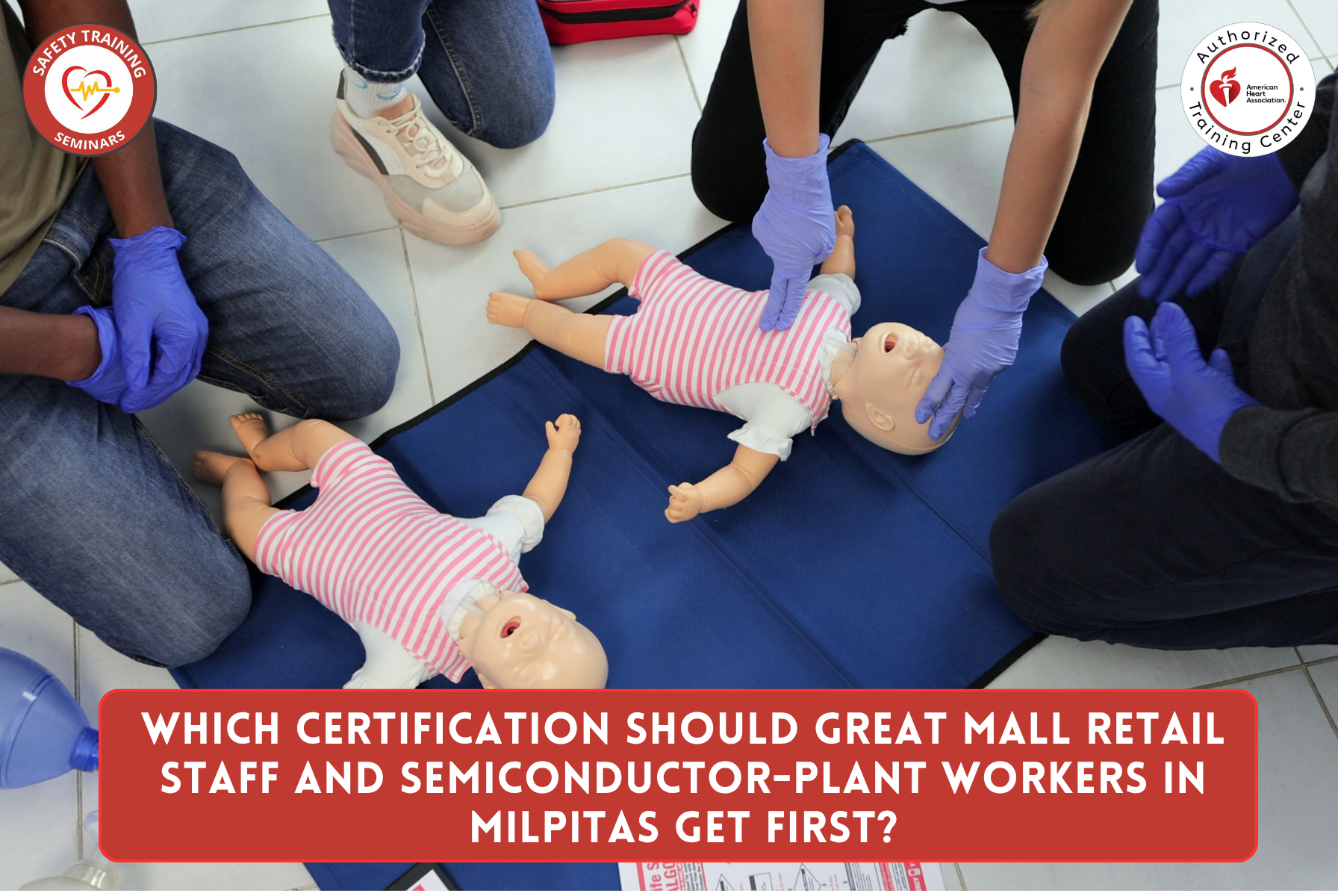
CPR/AED and First Aid training is commonly aimed at workplace and community responders. It teaches immediate actions a trained nonmedical person can take while professional help is being summoned, depending on the specific course.
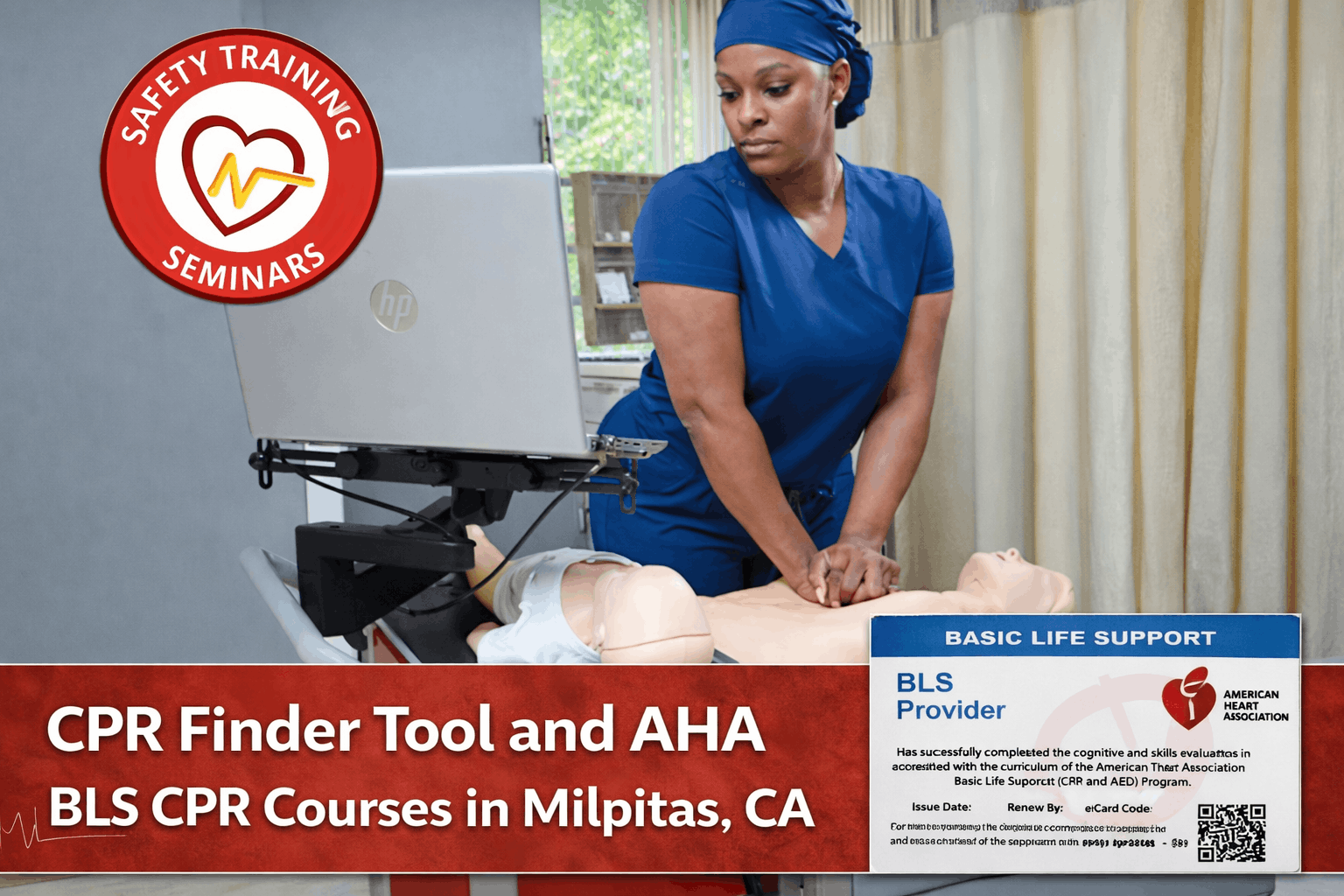
BLS, or Basic Life Support, is healthcare-oriented. AHA BLS includes CPR, AED use, ventilations, and team-based response skills for healthcare professionals and trained responders.
For a cashier, retail manager, manufacturing operator, or engineer, BLS may be more than the employer requests. For an occupational-health nurse, EMT, or clinical trainee, it may be exactly the right credential.
Why Hands-On Skills Still Matter
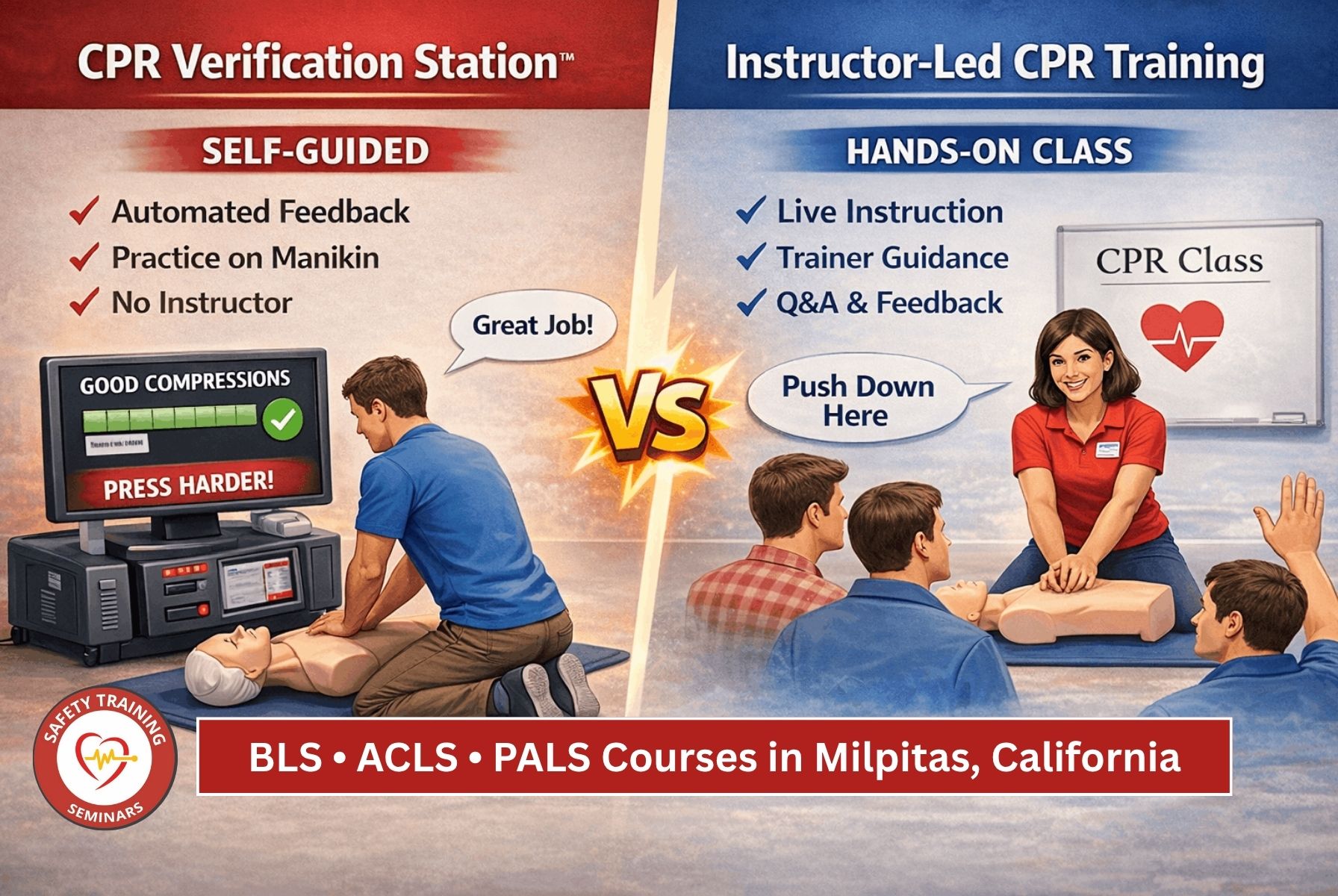
OSHA guidance recommends that CPR training develop hands-on skills, and OSHA has explained that physical skills such as CPR and bandaging require actual practice when the applicable standard requires training in those skills. The AHA also offers blended formats that pair online learning with hands-on skills practice.
Before choosing an online option, verify whether your employer requires hands-on practice, skills verification, or a particular completion card.
For employees whose commute extends toward Mountain View, the Mountain View CPR and healthcare certification course page provides another nearby option to compare.
Choosing Training in Milpitas Without Over-Certifying
The goal is the right credential, not the largest collection of credentials. A healthcare responder should not substitute general workplace CPR when BLS is specifically required.
Safety Training Seminars offers local training in Milpitas at 1772 Clear Lake Ave, Suite 200, Milpitas, CA 95035. Before enrolling, compare the available CPR, First Aid, and BLS choices with the exact wording from your employer, safety department, school, or professional program.
Those traveling farther south can also review Morgan Hill CPR, BLS, ACLS and PALS course information.
A Simple Order for Deciding What to Take
If you are unsure which class comes first:
- Ask for the exact requirement. Get the course name from your employer, safety manager, school, or licensing organization.
- Identify your response role. Are you a general workplace responder, designated first-aid responder, healthcare professional, or clinical student?
- Match the course to the role. CPR/AED and First Aid commonly fit nonclinical workplace needs; BLS fits healthcare-level roles.
- Confirm the training format. Check whether hands-on practice or skills verification is required.
- Register after the match is clear. This reduces the chance of completing a course that does not satisfy the actual requirement.
Frequently Asked Questions
Do Great Mall employees in Milpitas need BLS certification?
Not automatically. A typical retail position does not by itself establish a BLS requirement. Many nonmedical workplace roles are better matched to CPR/AED and First Aid training. Great Mall employees should ask their store, contractor, security employer, or management team for the exact required credential before registering.
Should a semiconductor technician take BLS or First Aid first?
For a nonclinical technician, CPR/AED and First Aid may be the more relevant starting point, but the employer’s emergency-response plan should decide. A semiconductor facility may assign different training to production staff, response personnel, occupational-health teams, or contractors. If the job specifically calls for BLS, take the specified BLS course.
Is BLS better than regular CPR for workplace employees?
No. BLS is not simply a “better” version of workplace CPR; it is designed for healthcare professionals and trained responders who need healthcare-level resuscitation skills. A workplace CPR/AED and First Aid course may be more appropriate for employees with little or no medical training.
Can employees from San Jose or Santa Clara take training in Milpitas?
They can consider the Milpitas training location when it fits their needs, but should first confirm the required course and current registration information. Workers traveling among Milpitas, San Jose, and Santa Clara can also compare the supplied nearby course-location pages before choosing where to train.
Does online CPR training satisfy a workplace requirement?
It depends on the employer and the applicable requirement. Some blended programs combine online learning with hands-on practice, while online-only training may not satisfy requirements that call for demonstrated physical skills. Confirm the accepted format with the employer or safety department before enrolling.
Which Course Should You Take First?
For most Great Mall retail staff and nonclinical semiconductor-plant workers in Milpitas, CPR/AED and First Aid is usually the logical starting point when it matches the employer’s requirement. A BLS CPR Certification Course is the better first step for healthcare professionals, trained responders, clinical students, or employees whose role specifically requires BLS.
Ask for the written requirement, identify your response responsibility, and confirm whether hands-on skills are required. Safety Training Seminars can then be considered as a local Milpitas option. Review the most relevant supplied course-location page for course type, current availability, location details, and registration information before enrolling.